Health & Fitness
A Different North Shore Top-10 List: Where We Are Knit Together
Every suburb or neigborhood has places where people feel comfortable and unselfconscious. These are the places where community flourishes. What's your favorite "social seam" in the northern suburbs?


Every community has places where people feel comfortable and unselfconscious. These are the places where community flourishes. In the Corona neighborhood where I grew up in Queens, New York, all of us kids flocked to the candy store on the appropriately named Junction Boulevard to buy our bazooka bubble gum and leaf through the latest comic books. Regardless of whether we were rich or poor, or what color or religion we were, this was our mecca.
It turns out that there is a technical term for the places that knit us together: social seams.
Find out what's happening in Winnetka-Glencoewith free, real-time updates from Patch.
In their 1998 article on what makes for stable racially and ethnically diverse communities, Chicago-based authors Phil Nyden, Michael Maly, and John Lukehart wrote:
"'Social seams' are those points in the community where interaction between different ethnic and racial groups is “sewn” together in some way – a concept used by Jane Jacobs in The Life and Death of Great American Cities (Jacobs 1961, 267). The most common seam is a grocery store of strip of stores. Even where people of different races and different ethnicities come together on a daily basis and where parents interact in the course of parent-teacher association activities and regular school events. Parks, special community-wide events, and neighborhood festivals can also serve as seams."
Find out what's happening in Winnetka-Glencoewith free, real-time updates from Patch.
Social seams are not only the wellsprings of community, but should be more consciously used by government entities or community groups to build civic leadership, or simply to make sure that everyone’s voices are solicited and heard on public issues. For example, this past fall on Chicago’s North Side, community members and the City of Chicago gathered residents together at the local YMCA to get everyone’s input on the redevelopment of an old rail bed into the “Bloomingdale Trail.” Check out the project’s web site – a model of engagement born in a social seam.
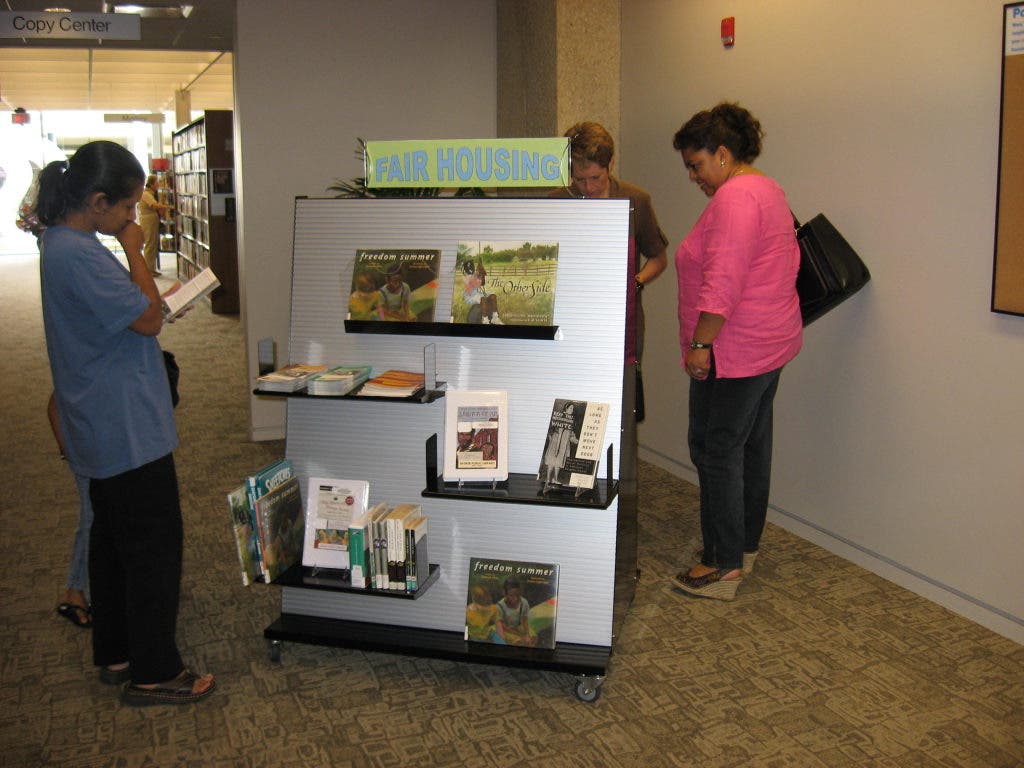
For me, as a Skokie resident, the Skokie Public Library fits the bill. It’s a gathering place for everyone. If I want to hold a meeting in Skokie that will attract a good cross-section of this multicultural village, this is where I’d hold it. It could be nicknamed a “comfort zone”.
What are your “social seams” in the northern suburbs of Chicago?


